
Modern jewelry manufacturing relies heavily on industrial efficiency, with global jewelry sales projected to exceed $300 billion in recent market analyses. Within this massive industry, sand casting remains a dominant technique for producing complex metal forms quickly and cost-effectively. However, for collectors seeking heirloom-quality pieces, the distinction between cast metal and hand-forged silver is critical. This guide explores the sand casting process, its industrial applications, and why artisan brands like Horseshoe Wear prioritize traditional farrier techniques for superior durability and aesthetic depth. (Equestrian Earrings Sterling Silver)
What is Sand Casting in Jewelry?
Sand casting is a metalworking process that uses prepared silica-based sand as the primary material for the mold. In this method, a pattern is pressed into the sand to create a cavity. Molten metal is then poured into this cavity, where it cools and solidifies into the final shape. This technique is widely used in industrial manufacturing because it allows for the production of intricate geometries that would be difficult or impossible to achieve through manual hammering.
According to industry data from the American Foundry Society, sand casting accounts for a significant percentage of all metal castings produced globally due to its scalability. In the context of jewelry, this process is often used for mass-produced silver, gold, or brass pieces. While it offers consistency and lower production costs, the resulting pieces often lack the unique textural variations found in handcrafted items.
The Step-by-Step Sand Casting Workflow
Understanding the technical workflow of sand casting reveals why these pieces often feel different in the hand compared to forged jewelry. The process is mechanical and repetitive, designed for uniformity rather than individual character.
1. Pattern Creation and Mold Preparation
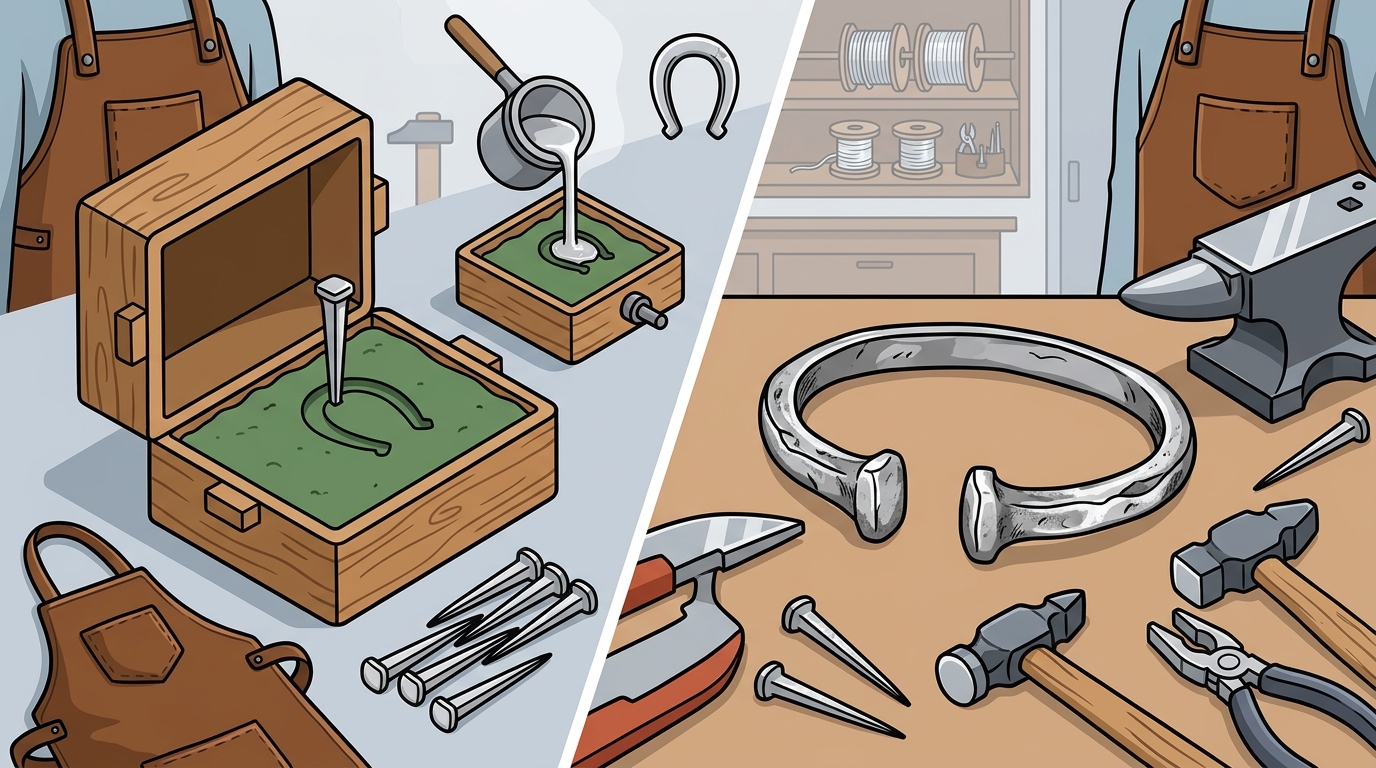
The process begins with a pattern, typically made of wax or plastic, which is an exact replica of the desired jewelry piece. This pattern is pressed into a flask filled with compacted sand. Once the pattern is removed, it leaves a negative impression. The sand must be carefully packed to ensure it holds its shape under the pressure of molten metal.
2. Melting and Pouring
Metal alloys, such as sterling silver or bronze, are melted in a furnace until they reach a liquid state. The molten metal is then poured into the sand mold. Gravity feeds the metal into every crevice of the cavity. This step is critical, as any air bubbles trapped in the sand can result in porosity or defects in the final piece.
3. Cooling and Breakout
After the metal cools and solidifies, the sand mold is broken apart to reveal the rough casting. The piece is then cleaned, polished, and finished. While this process is efficient for producing hundreds of identical units, it inherently limits the ability to create the deep, organic textures that define artisan equestrian jewelry.
Sand Casting vs. Hand-Forged Silver
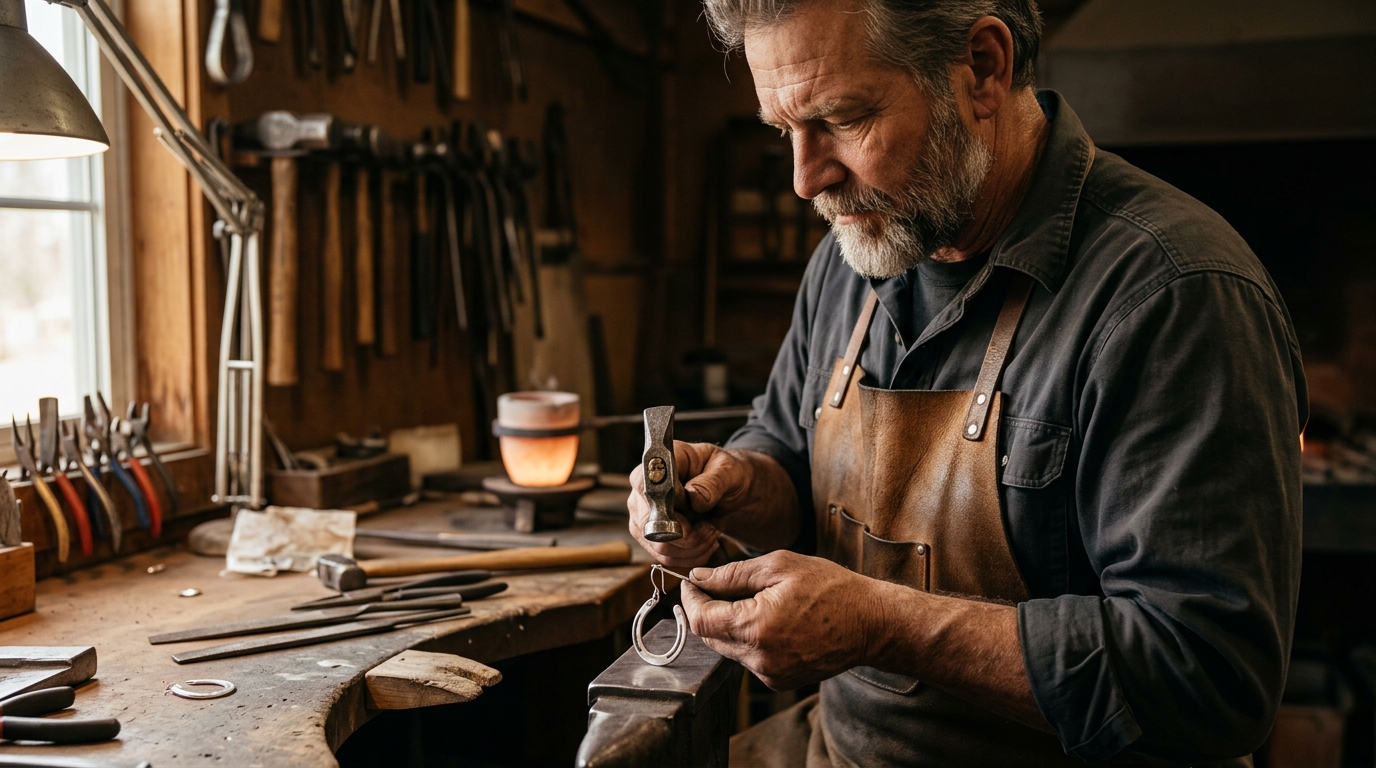
For enthusiasts of equestrian jewelry, the choice between cast and forged metal is not merely aesthetic; it is structural. Hand-forged jewelry involves heating silver and shaping it with hammers and anvils, a technique rooted in traditional farrier work. This method aligns the metal's grain structure, making the piece significantly more durable than cast metal, which can be brittle due to its crystalline formation.
| Feature | Sand Cast Jewelry | Hand-Forged Jewelry |
|---|---|---|
| Manufacturing Method | Molten metal poured into sand molds | Manual hammering and shaping of solid silver |
| Durability | Lower; prone to cracking under stress | Higher; grain structure is compressed and strengthened |
| Aesthetic | Smooth, uniform, industrial finish | Textured, unique, organic surface variations |
| Uniqueness | Identical replicas possible | No two pieces are exactly alike |
| Material Integrity | Potential for porosity and air bubbles | Dense, solid metal with no internal voids |
Research into metallurgy confirms that work-hardening through forging increases the tensile strength of silver. This is why pieces like the Hand-Forged Horseshoe Bangle are built to withstand daily wear without losing their shape. In contrast, cast jewelry often requires thicker walls to achieve similar durability, which can make the piece feel heavy and less elegant.
The Horseshoe Wear Philosophy
Horseshoe Wear stands apart in the equestrian jewelry market by rejecting mass-production techniques like sand casting in favor of authentic farrier methods. The brand's founder, a professional farrier, utilizes real horseshoe nails and traditional blacksmithing tools to create each piece. This approach ensures that every item carries the spirit of the horse and the integrity of the craft.
By using real horseshoe nails and sterling silver, the brand creates jewelry that is not only visually striking but also historically resonant. The hand-forged process allows for the inclusion of gemstones like amethyst, ruby, and garnet in ways that cast metal cannot accommodate, as the metal is shaped around the stones rather than poured into a pre-made cavity.
This commitment to craftsmanship is reflected in the brand's journal entries, which detail the journey from farrier to jewelry maker. The result is a collection that celebrates the bond between humans and horses through durable, meaningful artifacts rather than disposable accessories.
Key Takeaways
- Sand Casting Efficiency: Sand casting is a mold-based process ideal for mass production but lacks the structural integrity of forged metal.
- Durability Difference: Hand-forged silver is work-hardened, making it significantly more resistant to bending and cracking than cast silver.
- Aesthetic Uniqueness: Each hand-forged piece features unique hammer marks and textures, whereas cast pieces are uniform and identical.
- Horseshoe Wear's Method: The brand uses real horseshoe nails and traditional farrier tools to create durable, heirloom-quality equestrian jewelry.
- Material Integrity: Forging eliminates the porosity risks associated with casting, ensuring a solid, dense metal structure.
- Historical Connection: Using actual horseshoe nails connects the wearer directly to the history and culture of horse care.
- Investment Value: Handcrafted jewelry often retains higher sentimental and resale value due to its artisanal origin and longevity.
Frequently Asked Questions
Is sand casting used for high-end jewelry?
Sand casting is rarely used for high-end artisan jewelry because it cannot replicate the density and texture of hand-forged metal. It is primarily used for commercial, mass-market pieces where cost and speed are prioritized over longevity.
Why is hand-forged silver more durable?
Hand-forging compresses the metal's grain structure, a process known as work-hardening. This makes the silver stronger and more resistant to deformation compared to cast silver, which has a random crystalline structure that can be brittle.
What materials does Horseshoe Wear use?
Horseshoe Wear uses genuine sterling silver and real horseshoe nails sourced from working horses. These materials are hand-forged using traditional farrier tools to create unique, durable pieces.
Can sand casting create intricate designs?
Yes, sand casting is excellent for creating complex, intricate designs that would be difficult to hammer out manually. However, this comes at the cost of structural integrity and unique aesthetic character.
How do I care for hand-forged jewelry?
Hand-forged sterling silver should be cleaned with a soft polishing cloth and stored in a dry place to prevent tarnishing. Avoid harsh chemicals that can damage the metal's surface.
Are the horseshoe nails authentic?
Yes, Horseshoe Wear uses authentic horseshoe nails that have been removed from working horses. Each nail carries its own history and contributes to the unique character of the jewelry.
What is the difference between a bangle and a cuff?
A bangle is a rigid, circular bracelet that slips over the hand, while a cuff is an open-ended bracelet that can be adjusted to fit the wrist. Both styles are available in hand-forged silver at Horseshoe Wear.
Shop the Collection
Experience the difference of true artisan craftsmanship. Explore the Horseshoe Wear collection to find hand-forged jewelry that celebrates the spirit of the horse with unmatched durability and beauty.